About Xi’an
3,000 Years in a Nutshell: Why Xi’an Matters
Is this city just a pit stop for the Terracotta Warriors, or is there a deeper story here? When you ask about Xi’an, you are looking at the very bedrock of Chinese civilization. For thirteen dynasties, this wasn’t just a provincial capital; it was Chang’an (Eternal Peace), the political heartbeat of the empire and the center of the known world alongside Rome.
We aren’t talking about a dusty open-air museum. This is where the Silk Road starting point forever changed the global landscape. The city stands as a massive cultural intersection where Han Chinese traditions merged with Central Asian influences, creating a legacy that is distinct from Beijing or Shanghai.
The Cultural Contrast: Ancient Roots, Modern Pulse
Today, Xi’an holds the title of a nationally designated international metropolis. It is a surreal blend where Xi’an history crashes into the future. You will see high-speed trains gliding past 600-year-old ramparts and mobile payments powering street food stalls that have operated for generations.
Why this history matters for your trip:
- The Chang’an Legacy: Understanding the scale of the ancient capital of China gives context to the massive city walls and bell towers you will climb.
- Silk Road Diversity: This explains why the food here is heavy on cumin, wheat, and beef rather than rice and pork.
- Living History: Unlike a preserved exhibit, this is a functioning, modern city layered on top of millennia of secrets.
The “Big Three”: Essential Landmarks You Cannot Miss
If you are short on time, these are the non-negotiables. Xi’an has dozens of historical sites, but these three define the city’s identity and offer the most “bang for your buck” regarding cultural immersion and photo opportunities.
The Terracotta Army: Scale and Secrets
This is usually the main reason travelers book a flight to Shaanxi. The sheer scale of the excavation pits is hard to grasp until you are standing right there at the railing. We aren’t just talking about a few statues; it is an entire underground garrison.
- The Reality: Pit 1 is the massive hangar you see in photos, but Pit 2 and Pit 3 contain high-ranking officers and distinct formations.
- Booking Tip: Tickets are strictly limited by daily quotas. Do not expect to show up and buy one at the gate. You need to reserve your spot online well in advance.
- Deep Dive: To understand the Terracotta Warriors history and avoid the tourist traps, read our comprehensive Terracotta Army guide before you go.
The Ancient City Wall: Cycling the 13.7km Loop
While Beijing has the Great Wall, Xi’an has the most complete ancient city wall in China. It effectively splits the city into “inner” (historic) and “outer” (modern) districts.
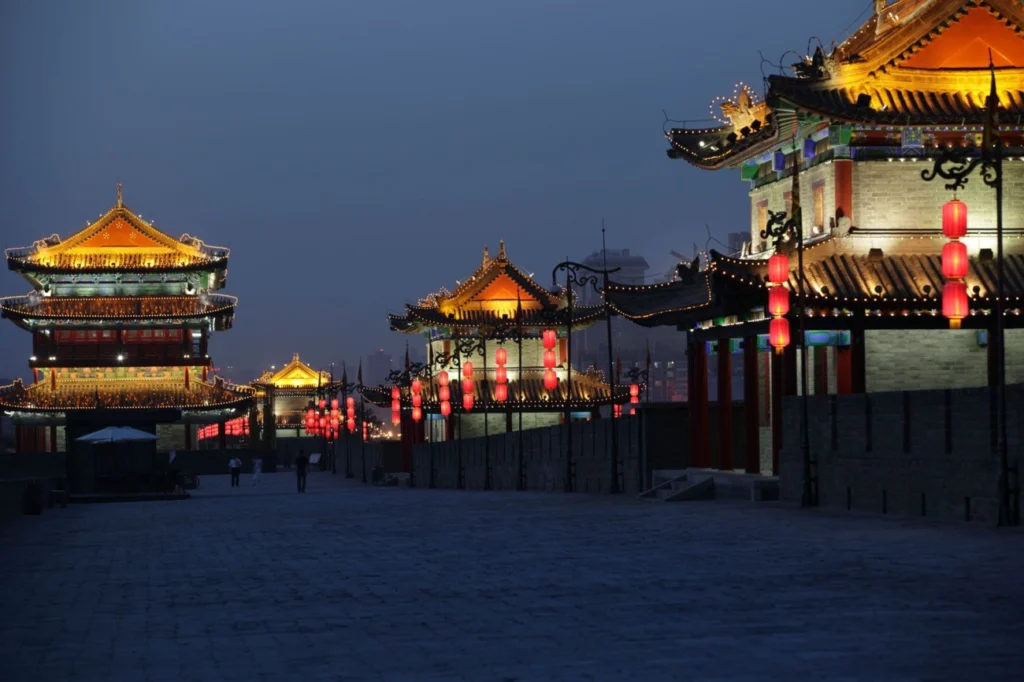
The best way to experience it is by renting a bike atop the fortifications. Cycling Xi’an City Wall takes about 90 minutes to complete the full loop. I highly recommend starting your ride around 5:00 PM. You get to see the city transition from day to night, watching the red lanterns turn on as the sun sets over the ramparts.
The Bell and Drum Towers: Center of the City
Located smack in the geographical center of Xi’an, these two towers are iconic landmarks that have stood watch since the Ming Dynasty. They are best viewed after dark when the floodlights turn on, making them one of the top things to do in Xi’an at night.
- The Bell Tower: Stands at the intersection of the four main avenues. It is a masterpiece of traditional timber architecture.
- The Drum Tower: Located just to the northwest, marking the entrance to the Muslim Quarter.
- Visiting: You can buy a combo ticket to climb both. For specific opening hours and architectural details, check our Xi’an Bell Tower guide to plan your evening route.
A Culinary Capital: The Flavor of Shaanxi
When I talk about Xian, I always emphasize that this city is a carbohydrate paradise. Situated in the Guanzhong Plain, the local diet is heavy on wheat rather than rice, resulting in some of the best noodles and breads in China. The cuisine here reflects the city’s history as the start of the Silk Road, blending traditional Han Chinese cooking with heavy splashes of cumin, chili, and mutton brought by Central Asian traders.
The Muslim Quarter (Huimin Jie)
For the most intense introduction to the local palate, I head straight to the Muslim Quarter. This area is the beating heart of Xi’an Muslim Quarter street food. It is a sensory overload in the best way possible—narrow stone alleys packed with vendors shouting their wares, the smoke of charcoal grills, and the scent of roasting walnuts and chili oil. It is crowded and loud, but it offers an authentic glimpse into the city’s living culture.
3 Dishes You Must Try
If you only eat three things while exploring the food scene in Xi’an, make sure they are these local legends:
- Roujiamo (Chinese Hamburger): This is the ultimate Shaanxi staple. It consists of succulent, chopped pork (or beef in the Muslim Quarter) stewed in a rich spiced broth, then stuffed into a crispy, oven-baked bun. It is savory, juicy, and perfect for eating on the go.
- Biangbiang Noodles: Named after one of the most complex Chinese characters, these are thick, belt-width noodles. They are typically served dry with a heap of garlic, green onions, and hot chili oil splashed over the top. It is a hearty bowl that defines the region’s love for wheat.
- Yangrou Paomo: This is more than a meal; it is an activity. You are given a bowl of hard, unleavened bread which you must break into tiny, soybean-sized pieces yourself. The chef then cooks your broken bread in a rich mutton broth with glass noodles. It is a savory, warming dish perfect for cooler days.
For a deeper dive into exactly what to order and where, read our detailed breakdown of Xi’an famous foods.
Modern Logistics: Traveling Xi’an in 2026
Traveling to the ancient capital has evolved significantly. As we update our Xi’an travel guide 2026, the biggest change is how accessible the city has become for international visitors. You no longer need to worry about complex logistics if you have the right digital tools set up before arrival.
Connectivity: Visa-Free Transit and High-Speed Rail
For many US travelers, the 144-hour visa-free transit policy is a game changer. It allows you to explore Xi’an for up to six days without a full tourist visa, provided you are transiting to a third country. This makes Xi’an a perfect stopover hub rather than just a final destination.
Once you are on the ground, moving between cities is incredibly efficient. The high-speed train from Beijing to Xi’an clocks in at just over 4 hours, offering a smooth alternative to domestic flights. The rail network connects you directly to the city center, avoiding the long commutes often associated with airports.
The Digital Ecosystem: Mastering Alipay and WeChat Pay
Forget about exchanging stacks of currency. China is a cashless society, and Alipay for tourists in China is your lifeline.
- Download Before You Go: Install Alipay or WeChat immediately.
- Link Your Card: You can now link foreign credit cards (Visa, Mastercard) directly to these apps without needing a Chinese bank account.
- Scan to Pay: From street food vendors in the Muslim Quarter to museum tickets, everything is paid for by scanning a QR code.
Navigation: Using Apple Maps and Translation Apps
Google services are blocked here, which catches many first-time visitors off guard. For reliable navigation, Apple Maps is the best option for English speakers; it pulls accurate public transit data and location names.
For Android users or more detailed local transportation info, apps like Amap (Gaode Maps) are superior but require some Chinese intuition. Always have a translation app like DeepL or Baidu Translate ready for reading menus and communicating with taxi drivers.
Quick Tech Checklist:
- VPN / Roaming: Ensure you have an eSIM with data roaming to bypass firewalls.
- Power Bank: Digital payments drain batteries; carry a portable charger.
- Trip.com App: Essential for booking train tickets and hotels in English.
Best Time to Visit Xi’an & Accommodation Guide

Planning your trip involves more than just booking flights; timing is everything when visiting this ancient capital. Based on our Xi’an travel guide 2026, hitting the weather sweet spot ensures you can comfortably explore outdoor landmarks like the City Wall without battling extreme temperatures.
Optimal Seasons: Spring and Autumn
For the most comfortable experience, I always recommend visiting during the shoulder seasons.
- Spring (March to May): The city comes alive with flowers, and the temperatures are mild, making it perfect for cycling the wall.
- Autumn (September to November): This is arguably the best time to visit Xi’an. The weather is cool and crisp, ideal for long days walking through the Terracotta Army site.
Travel Warning: Avoid Golden Weeks
If you want to enjoy the sights without shoulder-to-shoulder crowds, you must avoid China’s major public holidays.
- Labor Day: First week of May.
- National Day: First week of October.
During these “Golden Weeks,” domestic tourism spikes, and ticket lines for major attractions can become overwhelming.
Where to Stay in Xi’an First Time
Choosing the right base of operations is crucial for logistics. Most travelers debate between two primary locations:
| Location | Vibe | Best For |
|---|---|---|
| Bell Tower Area | The absolute center of the city. High energy, walkable to the Muslim Quarter and Drum Tower. | Travelers who want to be in the middle of the action and food scene. |
| South Gate (Yongning Gate) | Located right next to the Ancient City Wall. Offers stunning night views and easy access to the Metro. | Visitors looking for a mix of convenience, history, and slightly more upscale hotel options. |
FAQs: Common Questions About Visiting Xi’an
When writing about Xian, I notice travelers usually have the same logistical concerns. As a designated international metropolis, the city is well-equipped for visitors, but knowing what to expect makes the trip smoother. Here are the answers to the most frequent questions for your Xi’an travel guide 2026.
Is Xi’an safe for international tourists?
Yes, it is very safe. Xi’an holds titles like “National Civilized City” and has been voted “China’s Happiest City,” reflecting its stability and welcoming atmosphere.
- Street Safety: Violent crime is incredibly rare.
- Crowds: Just like in New York or London, keep an eye on your wallet in dense areas like the Muslim Quarter or near the Bell Tower.
- Nighttime: The city center is well-lit and active late into the night, making it safe to explore evening food markets.
How many days do I need to see the main sights?
To cover the “Big Three” and enjoy the food scene without rushing, plan for 2 to 3 full days.
- Day 1: Dedicate the morning to the Terracotta Warriors history (it’s a bit out of town) and spend the evening in the Muslim Quarter.
- Day 2: Cycle the Ancient City Wall and visit the Shaanxi History Museum.
- Day 3: Explore the Bell and Drum Towers or take a Mount Huashan day trip from Xi’an.
Do I need to speak Chinese to travel in Xi’an?
You do not strictly need to speak the language, but it helps to be prepared.
- Major Sites: The Terracotta Army and City Wall have English signage and audio guides.
- Navigation: Taxi drivers likely won’t speak English. Have your hotel write down destinations in Chinese or use a translation app.
- Payment: Set up Alipay for tourists in China before you arrive, as cash is becoming less common.
What is the difference between Xi’an and Beijing?
While both are ancient capitals, the vibe is distinct.
- Beijing: The current political center. It is massive, sprawling, and holds the Forbidden City and the Great Wall.
- Xi’an: The ancient capital (Chang’an) and Silk Road starting point. It feels more historically concentrated, especially within the City Wall loop.
- Food: Beijing is famous for duck; Xi’an is the capital of carbohydrates, famous for spicy Biangbiang noodles and Roujiamo.